Field Notes: Native Plant Walk at Sugarloaf Ridge
By Kathleen Scavone

“It couldn't be rinsed from his head and instead formed a gluey substance that necessitated his having to shave his head.” — John Lynch, Certified California Naturalist and Sonoma Ecology Center volunteer
Native Plant Walk at Sugarloaf Ridge
By Kathleen Scavone
SONOMA COUNTY, Calif. — It’s always a treat to attend a docent-led hike at Sugarloaf Ridge State Park at 2605 Adobe Canyon Road, situated in the Mayacamas Mountains in Sonoma County’s Kenwood, which is California-Wappo territory. This is a gem of a park with much to see and do. Besides hiking any of the 25 miles of trails and viewing the stunning 25-foot waterfall that splashes into Sonoma Creek, the park offers camping, yoga hikes, forest-bathing, horseback-riding and more.
Along with those activities Sugarloaf is home to the Robert Ferguson Observatory, considered to be Northern California’s most actively attended public observatory. The Sugarloaf Ridge Event Calendar is always full of fun, and wildlife abounds here — gray foxes, bobcats, coyotes, deer and more. Clear days provide views of the Sierra Nevada Mountains for those who attempt the 2,729-foot summit of Bald Mountain.
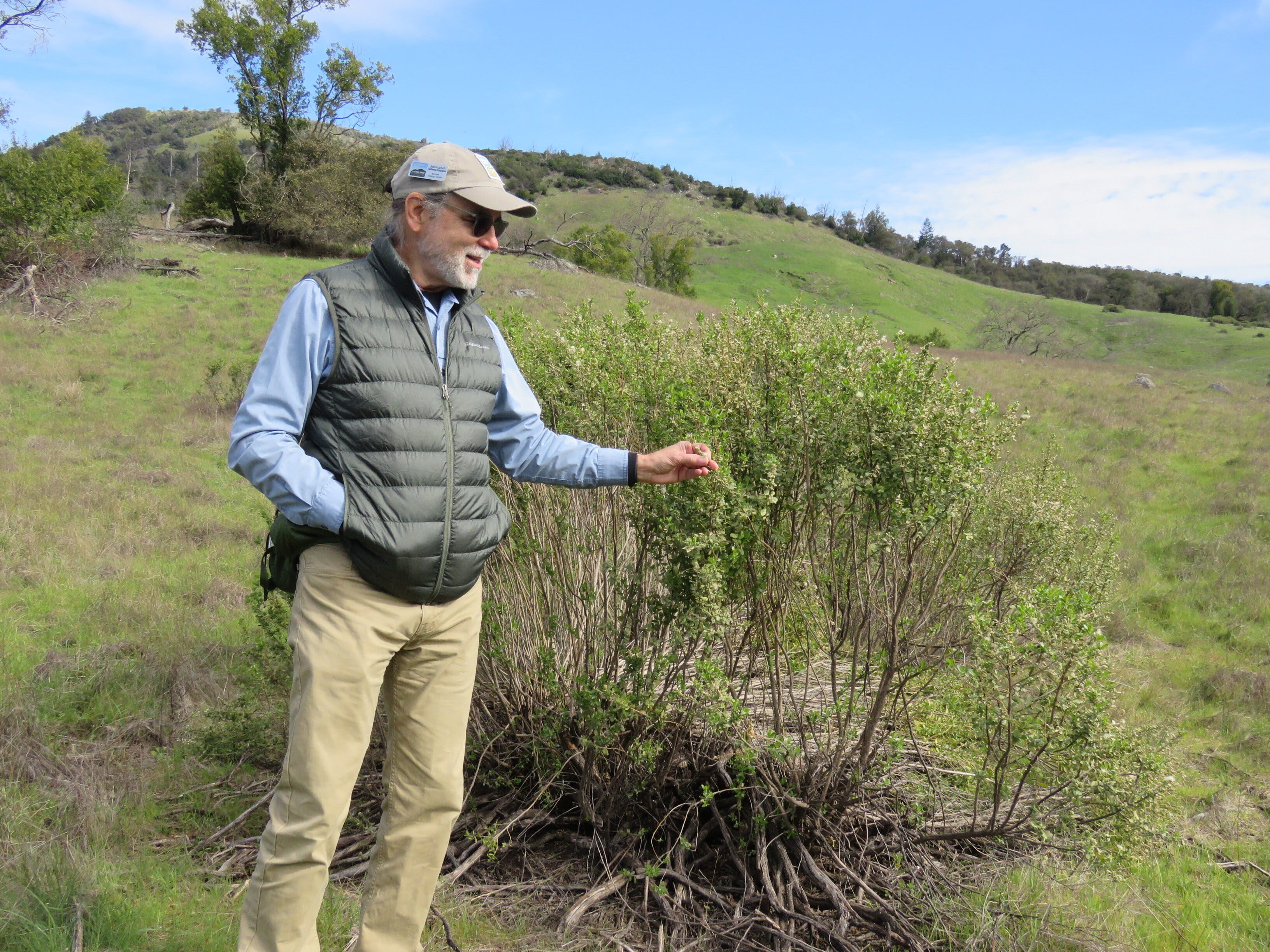
The recent snow was retreating on the surrounding mountains when a group of 10 hikers met for a native plant walk led by Certified California Naturalist John Lynch, a Sonoma Ecology Center volunteer since 2011 and hike leader throughout Sonoma County. Lynch moved here from the Hudson River Valley in upstate New York in 1980 and has been frequenting Sugarloaf ever since. He has a passion for learning and teaching about nature, and he is also knowledgeable about ethnobotany — the use of native plants in Indigenous culture — since he believes that these studies bridge the human experience with the natural world. We saw flowers in bloom all along the hike, even in late February, and there was also no shortage of stories and information to go along with the plant life we saw.
Sugarloaf, so named because early pioneers in the area thought a mountainous land feature resembled the loaves of sugar used back then, holds the headwaters of Sonoma Creek. This musical and energetic body of water flows through a canyon and gorge, along the green meadows dotted with slippery serpentine rock outcroppings and rises to mixed oak woodlands, redwoods, ferns and riparian settings. According to the Sonoma Ecology Center, at least 75% of the park burned in the 2017 Sonoma Complex fires, but it is verdant and lush today.


Lynch stressed that the original people of California and Sugarloaf, the California Wappo, have had experts among the tribes who understood the uses and importance of the plants here for thousands of years. They understood what plants made good pain-relievers and many other medicines and which plants were useful for basket-making, food and many other uses. The oak trees that thrive in the park are one example, since acorns were a staple food and are still enjoyed today after lengthy processing by shelling, pounding and leaching to rid them of tannins.
Also growing around the park and requiring specific knowledge of its traditional uses and preparations is wavy soaproot. Lynch explained that when he was young he learned of its uses as soap, as its name implies, and tried to concoct a shampoo. His understanding was incorrect, however, since it couldn’t be rinsed from his head and instead formed a gluey substance that necessitated his having to shave his head. Since then he has learned of its other uses as glue and a stunning agent for fish.

Yarrow (Achillea millefolium), Lynch explained, is a flowering plant with fernlike leaves that will grow to around 3 feet tall and have small white flowers. Traditionally it was used for cramps, fevers, colds, wound-healing and more.
Beautiful Pacific pea plant (Lathyrus vestitus) is a wild pea plant with delicate pink flowers found in forests and chaparral regions of California, but it is not edible since it can cause gastric issues.
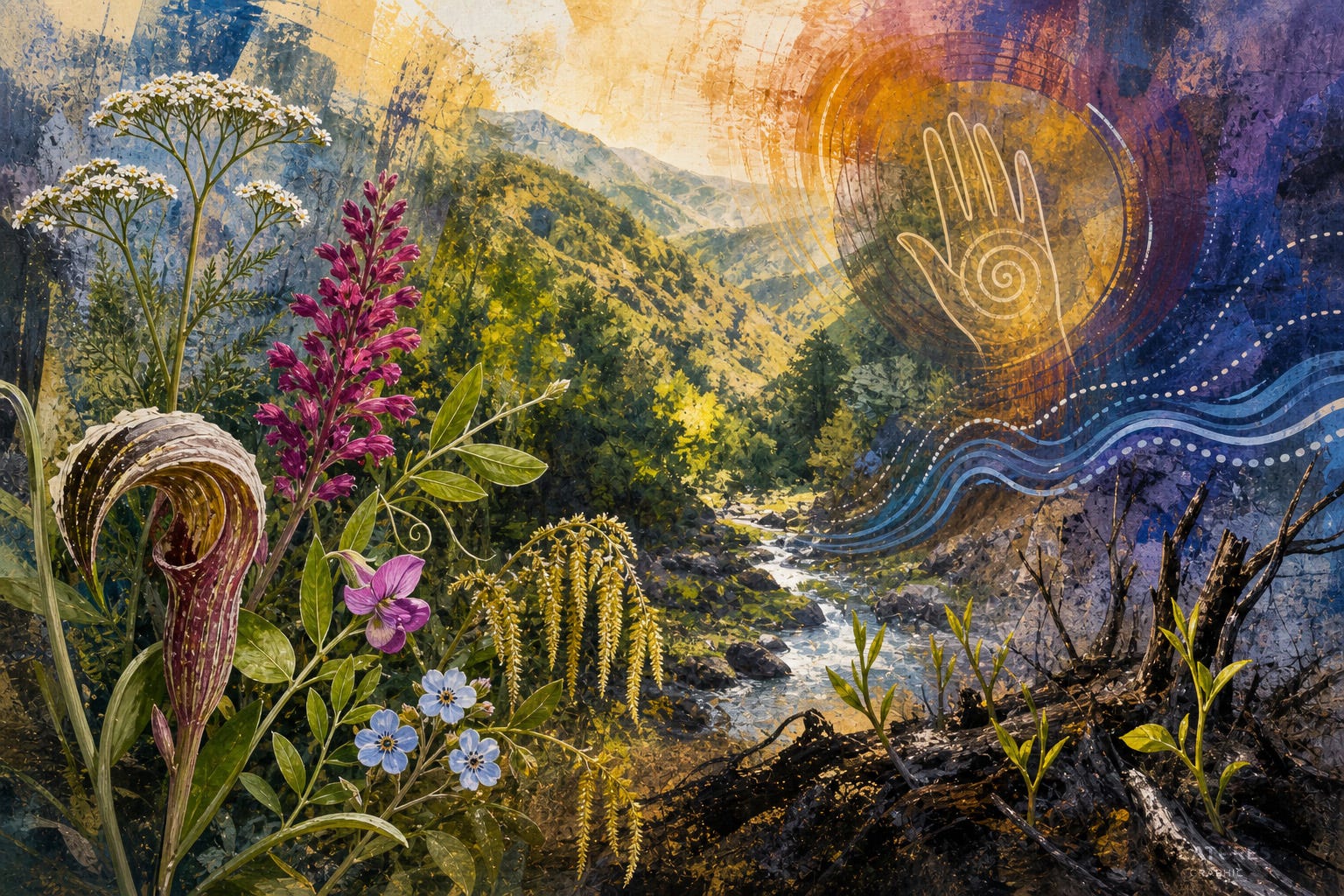
The warrior’s plume (Pedicularis densiflora) is an attractive perennial with red to magenta plumes that, according to Lynch, was not doing well in returning to grow in the park after the fires until one of the Indigenous volunteers who understood traditional ecological knowledge sang a beautiful song to the flowers in the traditional way. Now it is proliferating and doing well. Warrior’s plume is an important pollinator-attracting plant since it invites hummingbirds, checkerspot butterflies and bumblebees.
Sonoma Creek waterfall — Kathleen Scavone Video
One of the most unusual native plants and flowers seen on the hike was the California Dutchman’s pipe (Aristolochia californica), also called the California pipevine since its purple-striped curved shape resembles a pipe. Lynch explained that this plant grows in woods along streams, usually below 1,500 feet, and attracts small flies with its unpleasant odor. Some of the flies fall into the “bowl” of the flower, where they die and decompose, further adding to the unpleasant scent and attracting more small insects that are handy in picking up pollen.


Lynch said that the length of night tells plants when to bloom and also that plants are able to store sugar in their roots, corms or seeds. Beautiful coast live oak trees were in bloom with the male flower, or catkins, in evidence. The tiny flower, baby blue eyes or Nemophila menziesii, was in evidence in sunny areas of the park where Lynch explained the plant’s unique feature of its center markings or veins that “point” the pollinators toward this feature.

Coyote brush, Lynch pointed out, blooms in proliferation after a fire when it can secure the soil by way of its roots locking it down to stabilize the soil from erosion. The many white to yellow flowers on the bush attract insects and grow almost anywhere. Native bunch grass was in evidence as hardy plants that also stabilize the soil. Most grasses across the park are introduced grasses, however. As hikers made their way along Pony Trail, Lynch pointed out myriad fungi and slime molds such as yellow witch’s butter, black warlock’s butter, orange jelly fungus, turkey tail and red wavy cap mushroom that are all useful in decomposition.
Growing among the red manzanita and smooth, tan madrone are many other native flowers early in the season. Red larkspur (Delphinium nudicaule) is native to low-elevation canyons and foothills and grows in striking red or orange tones. This plant has long (around 2 feet long) string stems with few leaves and is also a great pollinator plant as well as being used medicinally as a narcotic.
Every bend in the trail is a delight at Sugarloaf Ridge State Park. Ferns of many species, horsetails, fungi galore, immense redwoods, oaks and Douglas firs along with talking creeks making their way to form the abundant Sonoma Creek’s 25-foot waterfall and more await.
—
Kathleen Scavone, M.A., retired educator, is a potter, freelance writer and author of “Anderson Marsh State Historic Park: A Walking History, Prehistory, Flora and Fauna Tour of a California State Park,” “People of the Water” and “Native Americans of Lake County.” She loves hiking, travel, photography and creating her single-panel cartoon, “Rupert.”
Explore These Related Articles:


Browse All Sonoma County Features Stories
All Napa Valley Features Stories
All Lake County Features Stories
—
The views, opinions and data presented in this article are those of the author and do not necessarily reflect the official policy, position or perspective of Sonoma County Features or its editorial team. Any content provided by our authors is their own and is not intended to malign any group, organization, company or individual.